
CCM programme starts with pre-conference activities, including:
- WS 01. Design of experiments (by Magalie Claeys-Bruno)
- WS 02. Multivariate and Multiway error (by Héctor C. Goicoechea)
- WS 03. Deep Learning (by Darió Pasos)
Each workshop will take approximately 4 hours with a coffee-break in between.
The scientific programme, traditionally, includes a plenary lecture, several keynotes, as well as oral and poster comminications. The keynote lectures will last for 30 minutes (25 minutes for the presentation + 5 minutes for questions), the oral communications will be give 20 min (15 minutes for the presentation + 5 minutes questions).
Meat the invited speakers and workshop teachers.
Plenary

Rasmus Bro
Rasmus Bro is Professor of Chemometrics at the University of Copenhagen, Denmark, and one of the world's leading experts in chemometrics. He has made pioneering contributions to multi-way analysis, tensor decomposition, multivariate calibration, and chromatographic data analysis, making us travel to PARADISe with his new company, Kromath ApS. His research has shaped modern analytical chemistry and spectroscopy, with applications ranging from food science to metabolomics and industrial process monitoring. He is the author of numerous highly cited publications and widely used MATLAB toolboxes, and has played a major role in advancing chemometrics education worldwide.
Keynotes
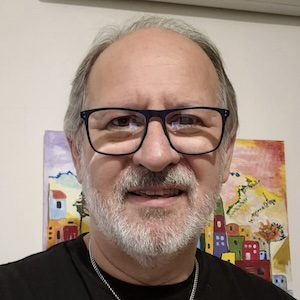
Héctor C. Goicoechea
Héctor C. Goicoechea was born in Santa Fe, Argentina, on May 15, 1961. He received his Ph.D. (2000) from the National University of Rosario. After postdoctoral research at North Dakota State University, USA, he joined the University of Litoral, Santa Fe (2004), where he is a full professor of Analytical Chemistry/Chemometrics. He is a fellow of the National Research Council of Argentina (CONICET) and has founded a research group (LADAQ). He has published more than 250 scientific articles in well-known international journals and supervised thirteen Ph.D. theses. His research interests focus on the development of new analytical methodologies based on multi-way data generation (chromatography, fluorescence spectroscopy, and electrochemistry) coupled with calibration and classification/discrimination for solving environmental, biomedical, food, and forensic problems.
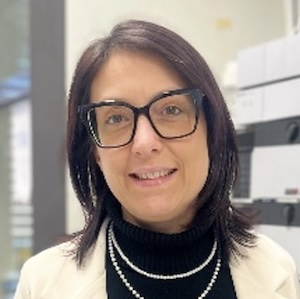
Caterina Durante
Caterina Durante is Associate Professor of Analytical Chemistry at the Department of Chemical and Geological Sciences, University of Modena and Reggio Emilia, Italy. She earned her Ph.D. in Chemistry in 2006 with a thesis entitled “Quality and Safety Assurance of Foods: A Multi-way Approach”. Her research focuses on the development, optimization, and application of analytical and chemometric methodologies for the characterization of complex matrices, with particular emphasis on chemometric approaches to the untargeted analysis of chromatographic data in food and environmental applications.
Magalie Claeys-Bruno
Magalie Claeys-Bruno is a Full Professor at Aix-Marseille University (AMU), France, and a researcher at the Mediterranean Institute of Biodiversity and Marine and Continental Ecology (IMBE). She leads the CHIPS team, which focuses on chemometrics, design of experiments, and expert systems. Her research centres on experimental design and statistical modelling to better understand and optimise complex systems. Her work includes space-filling designs, supersatutared designs, analysis of high-dimensional data, and applications to chemical processes, formulation, and environmental sciences.
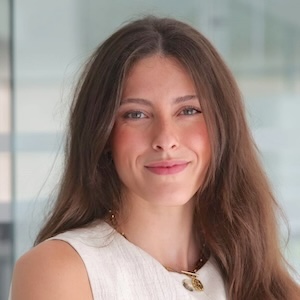
Fátima Saiz Álvaro
Fátima Saiz is Director of Operations at the Bilbao Headquarters of Vicomtech, a Spanish applied research centre specialising in Artificial Intelligence, Visual Computing and Interaction, where she also leads the Generative AI for Industrial Engineering research line within the Industry and Advanced Manufacturing Department. She holds a degree in Geomatics and Surveying Engineering from the University of the Basque Country (UPV/EHU), where she graduated top of her class, a Master’s in Visual Analytics and Big Data, and an MBA Tech. She received her Ph.D. cum laude from UPV/EHU in 2023 with a thesis entitled “Artificial Intelligence for Advanced Manufacturing Quality Control”. Her research focuses on AI-based computer vision for industrial quality control, including deep learning, hyperspectral imaging, multimodal data analysis and anomaly detection, with applications in sectors such as automotive, glass recycling and metal processing. She has led numerous research and technology transfer projects with industry, teaches in Master’s programmes at the University of Deusto and UPV/EHU, and actively participates in STEAM initiatives promoting scientific vocations among girls and young people.
Workshops
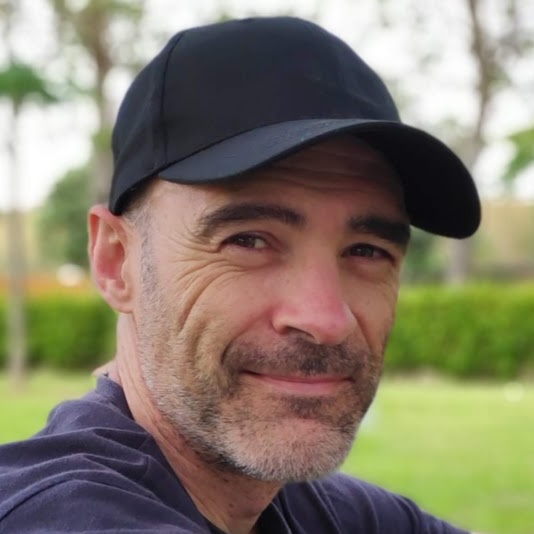
Dário Passos
Dário Passos is a professor at the Physics Department of the University of Algarve (Portugal), specializing in nonlinear optics and light scattering in turbid media and PI of the DeepLight Lab group. His research focuses on Vis-NIR spectroscopy and deep learning applications in chemometrics. He holds a degree in Physics Engineering (UAlg) and a PhD in Physics/Astrophysics (IST-Lisbon). Following postdoctoral research (2011–2017) in solar magnetic field modelling at the University of Lisbon and Université de Montréal, he transitioned in 2018 to research involving NIR spectroscopy and optical sensing in complex media. As a former member of the Center of Electronics, Optoelectronics and Telecommunications (CEOT-UAlg), he led interdisciplinary projects combining experimental NIR instrumentation, physics-based modelling of light transport, and innovative deep learning techniques to advance spectral analysis applications in the food industry, also co-leading efforts in IoT sensor networks for agri-food applications.